Home Sellers
How should a Bend seller think about value without guessing?
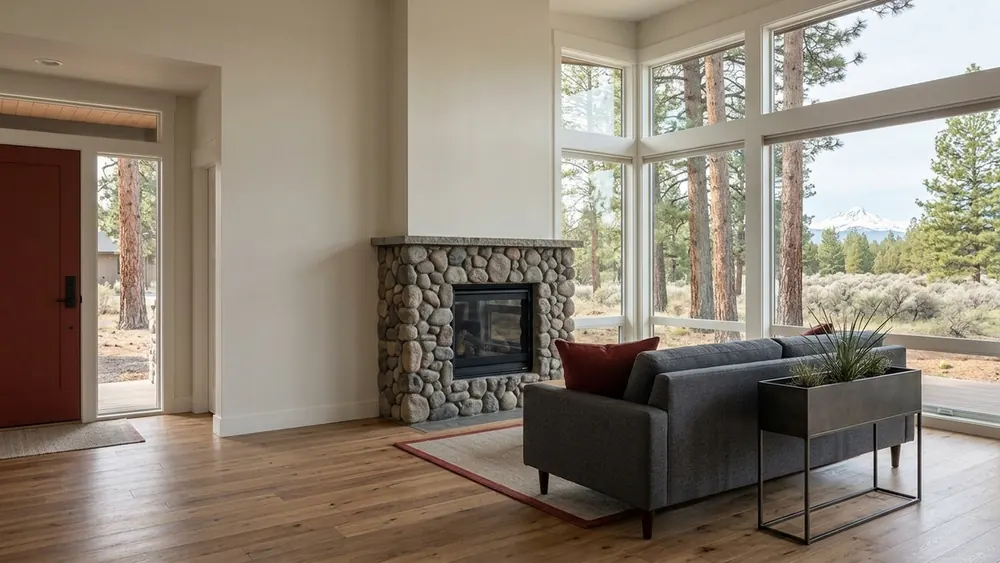
A Bend seller can think about value without guessing by comparing similar homes that sold nearby, adjusting honestly for condition and features, and treating the result as a reasoned range to discuss rather than a single hopeful number.
On this page
The direct answer on value
If you are selling in Bend, think about value by comparing your home with similar homes that sold nearby, then adjusting for the differences in condition and features. The result is a reasoned range, not a single number, and the reasoning matters as much as the range itself. Starting there keeps the conversation grounded in what buyers have actually done, rather than in a figure someone hoped for or heard secondhand.
This matters because value shapes many of the choices that follow: how you prepare the home, how you approach a list price, and how you respond to offers. A guess, even a well-meant one, can lead to decisions that are hard to undo once the home is on the market. A clear comparison gives you something to test and question, and it helps you explain your thinking to anyone involved in the sale.
This article is educational. It explains a way of thinking about value, the questions worth asking and the assumptions that cause surprises. It makes no prediction about what any home will sell for, gives no market statistics and does not promise any outcome. It is not an appraisal. If you need a formal valuation for lending, legal or tax purposes, ask the lender, attorney or tax professional involved what they require.
Why online estimates are only a start
Many sellers start with an online estimate, and that is a reasonable way to get curious. The limitation is that an automated figure usually cannot see inside your home. It may not know about a recent update, an older system that needs attention or a feature that sets the home apart from others nearby. Treat any automated figure as a prompt for questions, not as an answer, and do not plan your next move around it.
A neighbor’s sale can mislead in a similar way. Two homes on the same street can differ in size, layout, condition and updates, and the terms behind a sale are rarely visible from the outside. Hearing what a nearby home sold for is useful only once you know enough about that home to compare it fairly with yours. Without that detail, the figure is closer to a rumor than a reference point you can use.
Your own purchase price, or the amount you have put into the home, is another figure that feels relevant but does not set value on its own. Buyers compare your home with the alternatives available to them now. What you paid and what you spent are worth writing down for your records and for tax questions, which belong with a tax professional, but they are not a substitute for a current comparison of similar sales.
How a comparison of similar sales works
A useful comparison starts by choosing homes that are genuinely similar: close in size, layout, age, lot type and general condition, and located near enough that a buyer would weigh them against each other. Recent sales usually say more than older ones, and closed sales say more than asking prices. The aim is to find the homes a buyer of your home would also have considered, then learn what those buyers actually did.
Once you have those homes, look at the differences one at a time. Is your kitchen more or less updated? Are the heating and roof newer or older? Is there a garage, a shop or extra parking where the others have none? Each difference nudges the comparison up or down. The point is not precision to the dollar. It is a clear, honest account of how your home compares with the homes buyers chose.
Homes differ in style, age and setting, so the choice of comparable sales deserves care. Helen can help you select homes that are truly similar and talk through each adjustment with you. You stay in charge of the reasoning: if an adjustment does not make sense to you, ask about it until it does. A range you understand is far more useful than one you accept on trust, because you will be the one relying on it.
Features and condition to note honestly
Before any value conversation, make your own list of what the home has and what it needs. Be as honest as a buyer’s inspector would be. Sellers often notice their home’s strengths easily and overlook the items they have lived with for a long time. Writing both down gives the comparison a fair starting point and helps you see your home the way a buyer will on a first visit.
- Updates you have made, with approximate dates and any permits or receipts you kept
- Systems that are older or due for service, such as heating, roof or water heater
- Features a buyer would notice, such as a garage, shop, deck or extra storage
- Items you have been meaning to repair and have not yet had time to address
If you are unsure about the condition of a system, a licensed home inspector can tell you what they see before you list. That gives the comparison real information instead of assumptions. It also helps you decide which items to repair, which to disclose, and which to factor into your thinking about price. Ask a real estate attorney if you are unsure how a known issue should be described to buyers.
Questions to ask about any value range
When someone offers you a value range, ask questions until you can explain it yourself. The table below lists questions worth raising, why each one matters and who usually answers it. It does not rank sources, and it is not a substitute for advice from the professionals named in it. Use it as a checklist when you sit down to talk about value, and add your own questions as they come up.
| Question | Why it matters | Who to ask |
|---|---|---|
| Which sales were used for comparison? | Shows whether the homes are truly similar to yours | Helen, on the real estate side |
| How were condition differences adjusted? | Explains why the range sits where it does | Helen, with your own notes on the home |
| What condition issues could a buyer find? | Avoids surprises during the inspection period | A licensed home inspector |
| What should I disclose about the home? | Keeps the paperwork accurate and complete | A real estate attorney |
| How could the sale affect my taxes? | Depends on your own situation and records | A tax professional |
Notice that only some of these questions belong to the real estate side. Value sits inside a wider set of questions about condition, disclosure and taxes, and each one has its own source. Keeping them separate prevents one person’s opinion from standing in for another professional’s advice, and it gives you a clear record of who said what if anything changes later in the process.
Assumptions that lead to surprises
One common assumption is that the highest number you hear is the right place to start. A high figure can feel encouraging, but if similar sales do not support it, it may lead to a longer search for a buyer and a harder conversation later. Another assumption is that a low figure must be cautious and therefore reliable. Neither holds as a rule. Judge any figure by its reasoning, not by how it makes you feel.
A further assumption is that value is fixed once you have a range. Circumstances change, new sales close and buyer questions reveal things about the home. A range is a starting point for decisions, and it is reasonable to revisit it as you learn more. What matters is that every change has a reason you can see and explain, rather than a sudden new number with nothing behind it.
Preparing for a value conversation
Before you talk about value, gather what will make the conversation useful. You do not need everything, but the more of it you have, the more grounded the comparison can be. If your search for a next home may widen beyond Bend to Sunriver, La Pine, Redmond or Sisters, note that too, since it affects your timing and planning across Central Oregon.
- Your list of updates, repairs and known issues, written down honestly
- Any receipts, permits or service records you have kept for the home
- Your preferred timing and whether you need to buy another home first
- Questions for a lender about financing your next purchase
If you would like to work through it together, you are welcome to bring those notes to Helen Marston at Keller Williams Realty Central Oregon. You do not need to have a number in mind or a firm decision to sell. A first conversation can happen in English or Chinese. Which part of value feels least clear to you right now: the comparable sales, the adjustments or how to use the range?
This article is general information about buying, selling and investing in homes in Bend, Sunriver and Central Oregon. It is not legal, tax, lending, land use, rental licensing or inspection advice and does not predict prices, rental income or returns or promise results. Confirm financing with a lender, rental and land use rules with the city or county and any homeowners association, taxes with a tax professional, and property condition with a licensed home inspector. Helen Marston, Keller Williams Realty Central Oregon.

Written by